
Sergey Kubensky, the technologist of the Vologda Dairy Plant, shared some secrets of choosing the right cheese!
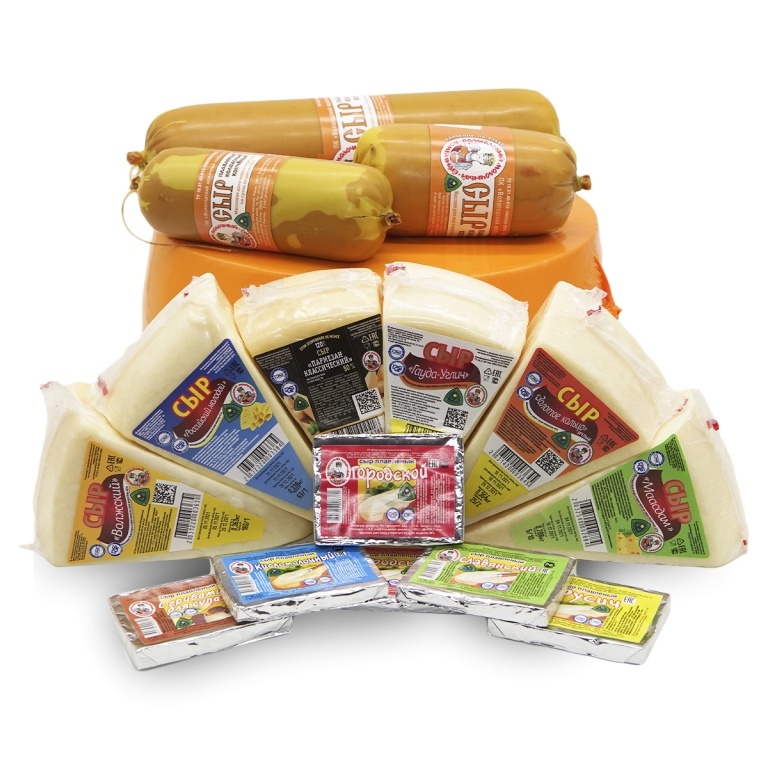
Cheese production is the highest level of milk processing. At the same time our region has long been considered unsuitable for cheese making. However, today dozens of different cheeses are produced in the region, and the Vologda Dairy Plant alone offers a line of 12 types of cheese.
Where does the manufacturer buy special "cheese milk"? Is it possible to make Italian and Dutch cheeses from local raw materials? How is such a price for the product in stores justified and how can you tell real cheese?
- Our production cooperative is a collective enterprise, and we work in close relations with milk producers, - Sergey Alekseevich states. - Among them, we found those who supply high-quality milk, including cheese-friendly milk. The plant accepts high-quality milk from farms at a higher cost. All standards are specified in milk supply contracts; we have established cooperation with many farms in the Vologda District, Vologda Oblast and neighboring regions. More than half of the milk supplied to the enterprise corresponds to the VMK brand variety, a variety with increased requirements compared to the GOST for raw milk.
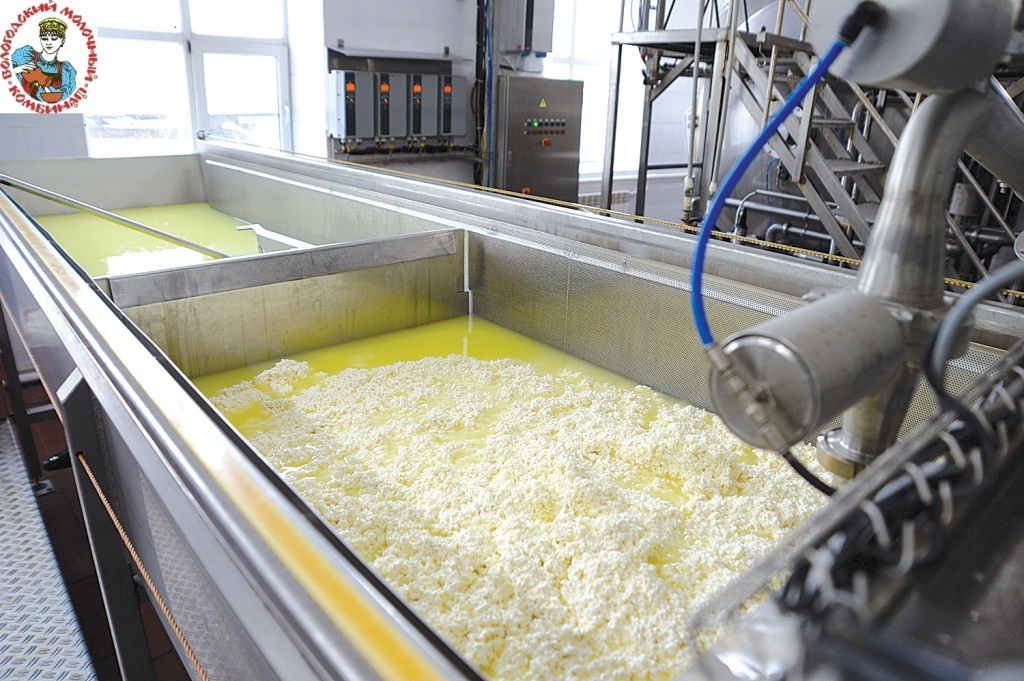
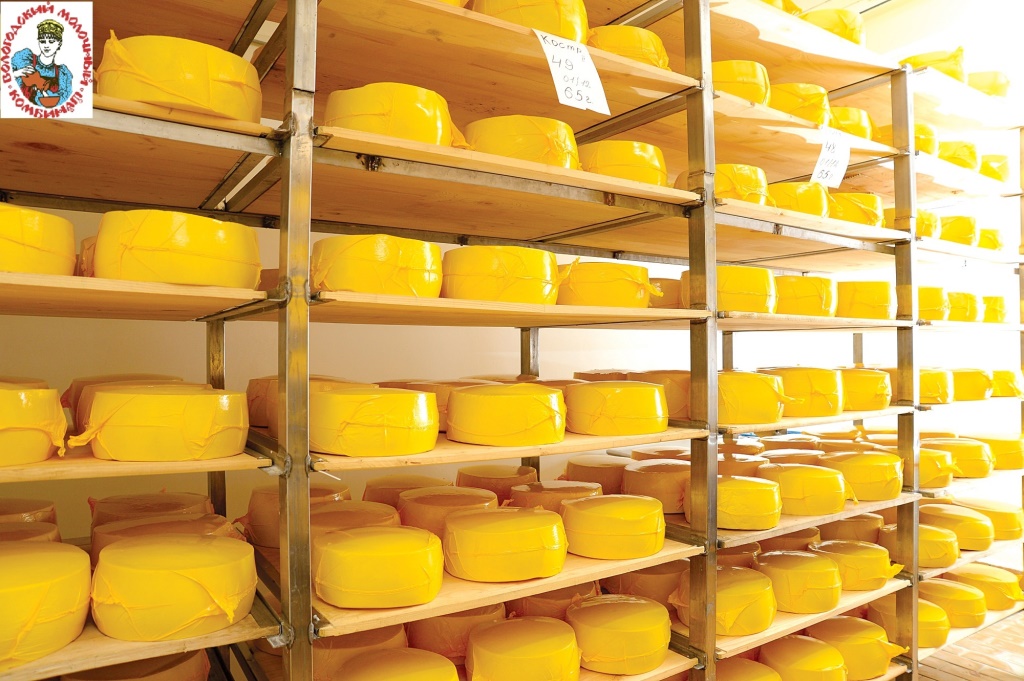
Cheese production begins with careful processing of milk, bringing it to the coagulation temperature. The coagulation process itself, using a solution of calcium chloride, rennet (purchased in Holland) and bacterial starters, lasts about an hour. Then the finished cheese grain enters the molding apparatus. The cheese mass is pressed for several hours and sent to pools with brine. After salting and drying, the cheese is sent for ripening; for semi-hard varieties, for example, it lasts more than a month. Today, the Vologda Dairy Plant line includes 11 semi-hard cheeses and 1 hard cheese.
They are divided into two groups - by the method of molding. Cheeses of the Dutch group are molded from a layer: "Gouda", "Maasdam", "Golden Ring", "Kostroma" and "Poshekhonsky" - they are characterized by a round or oval eye. In this series, the famous cheese "Maasdam" stands out - for its production we use a starter that gives abundant gas formation, as a result, the eye is large, and the cheese itself has an amber-yellow color and a noble spicy taste.
The second group - the so-called domestic cheeses, are produced not from a layer, but in bulk. The finished grain from the cheese maker together with the whey is fed to the whey separator - a mesh drum. The whey drains, and the grain enters the mold, pours out, that's why they say - "in bulk". These groups differ in the intensity of lactic acid fermentation, so Dutch cheeses have a more spicy taste, and Russian cheeses are more sour, spicy, salty.
Cheeses at the Vologda Dairy Plant are produced strictly from natural raw materials using traditional Russian technologies. High-quality ingredients are used without the addition of dyes, preservatives and other chemicals. Therefore, good natural cheese cannot be cheap. We can calculate: one kilogram of cheese requires about 12 liters of high-quality milk, and this leads to the concentration of proteins, milk fat, minerals, vitamins, vital and valuable for humans. Their content in cheese is 10 times higher than in the milk from which it is made!
- Our tank capacity is five tons, but we only get 450 kilograms of cheese. Hard "Parmesan" generally has 35% moisture - it is so concentrated, that's why it is expensive, - the technologist confirms. - During the ripening of the product, it needs to be looked after, and this requires labor and energy, which also affects its cost. Therefore, if you see a suspiciously cheap cheese product in the trade, it means that the manufacturer saved money, used substitutes for milk fat and protein.
We are waiting for you in the branded points of sale of the PC "Vologda Dairy Plant" and in the city stores where you will find a wide range of delicious and natural cheese: https://vmkmilk.ru/catalog/syry
We are waiting for your shopping!
Always yours, Vologda Dairy Plant